



Black Widow Spiders vs. Common Indoor Spiders in Bay Area Homes
As spider activity increases during the cooler months, many Bay Area homeowners begin noticing spiders indoors and ask the same question:
“Is this a black widow?”
In a previous ATCO Pest Control blog, we covered black widow spiders in detail—where they live, how common they are in the Bay Area, and when they pose a concern. This article builds on that foundation by helping homeowners compare black widows to common indoor spiders that are frequently mistaken for them.
Our goal is to further educate Bay Area residents so they can identify what they’re seeing, understand when concern is warranted, and know what steps actually help reduce spider activity indoors.
How to Identify a Black Widow Spider
Black widow spiders (Latrodectus hesperus) are one of the few spiders in California considered medically significant, but accurate identification is important—especially because not all black widows pose the same level of concern.
The spider most people worry about is the adult female black widow. She is glossy black with a distinctive red or orange hourglass marking on the underside of her abdomen. Female black widows are the ones capable of delivering a medically significant bite, although bites are rare and typically occur only when the spider is accidentally pressed or trapped.
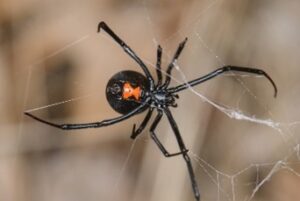 Adult female black widow hanging in an irregular web. Females are the medically significant ones.
Male black widows, however, do not pose a hazard to humans. They are much smaller than females and are usually brown or gray with lighter striping or spots. Males lack the potent venom associated with females and are not considered medically significant. Because of their appearance, they are often mistaken for other harmless spider species.
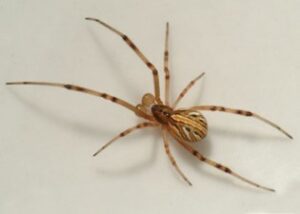 Male western black widow: smaller, lighter colored, and not considered a hazard to humans.
Black widows typically build irregular, tangled webs close to the ground and prefer dark, undisturbed areas. In Bay Area homes, they are far more likely to be found in garages, crawlspaces, storage areas, utility boxes, or outdoor clutter than inside active living spaces. When a black widow is found indoors, it is usually incidental rather than a sign of an indoor infestation.
Common Indoor Spiders Often Mistaken for Black Widows
Triangulate Cobweb Spider (A Common Black Widow Look-Alike)
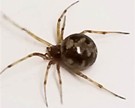 Triangulate cobweb spider—commonly mistaken for widows due to its shape and web style.
The triangulate cobweb spider (steatoda triangulosa) is one of the most frequently misidentified spiders in Bay Area homes. These spiders are smaller than black widows and have brown or tan bodies with light geometric or zig-zag markings. They commonly build cobwebs in corners, closets, and storage areas, which can add to the confusion.
While they may resemble black widows at a glance, triangulate cobweb spiders are not dangerous to humans.
Cellar Spider (“Daddy Longlegs” Spider)
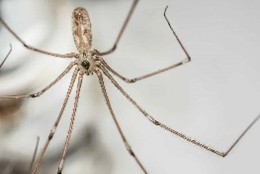 Cellar spiders are common in garages and corners and are harmless.
Cellar spiders (pholcidae family) are easily recognized by their extremely long, thin legs and small bodies. They are commonly found in garages, basements, and upper corners of rooms where air movement is minimal. Despite persistent myths, cellar spiders are harmless and rarely bite. Their presence indoors is usually tied to moisture, insects, and undisturbed areas rather than any structural issue.
Wolf Spider (An Accidental Indoor Visitor)
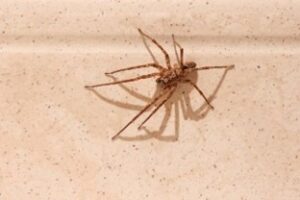
Wolf spiders (Lycosidae family) are large, fast-moving spiders that often cause concern simply because of their size. Unlike web-building spiders, wolf spiders actively hunt insects and are typically found at ground level. In the Bay Area, they usually live outdoors and wander indoors by mistake during seasonal changes. Although intimidating in appearance, they are not aggressive and generally try to escape rather than bite.
Why Spider Sightings Increase in Bay Area Homes During Cooler Months
As fall transitions into winter, spider sightings indoors tend to increase—not because spiders are invading, but because environmental conditions are changing. Cooler nighttime temperatures, increased insect activity indoors, and disturbed storage areas all contribute to spiders being seen more frequently. Small gaps around doors, foundations, and utility lines also make it easier for wandering spiders to enter homes accidentally.
Integrated Pest Management (IPM) Tips for Homeowners
Because these are actionable steps homeowners can follow, a checklist format works best here:
- Keep garages and storage areas organized to reduce hiding spots
- Move firewood, debris, and stored items away from foundations
- Seal gaps around doors, windows, and utility penetrations
- Vacuum spiders and webs instead of spraying
- Reduce exterior lighting near entry points to limit insects
These steps focus on eliminating the conditions that attract spiders rather than reacting after spiders appear indoors. To learn more about Integrated Pest Management, click here.
When It Makes Sense to Call a Professional
There are times when a professional inspection can be helpful—especially if you’re unsure whether a spider is medically significant, sightings continue despite cleanup, or children and pets are present. In these situations, correct identification and a thoughtful approach matter more than simply removing what you can see.
At ATCO Pest Control, our focus is first on understanding the conditions that allow spiders to thrive. We begin with an inspection so we can identify where spiders are congregating and why—whether it’s exterior harborage, insect activity, or structural entry points. This allows us to address the source of the activity rather than reacting to individual sightings.
Whenever possible, we prioritize the use of natural or reduced-risk products in landscape areas, where spiders and their insect prey typically originate. Interior treatments are approached conservatively and only when appropriate. Our goal is to reduce spider pressure around the structure so fewer spiders find their way indoors in the first place.
For many Bay Area homeowners, we also recommend a maintenance-based approach that provides year-round control. This allows seasonal spider activity to be managed proactively rather than addressed after it becomes noticeable inside the home.
As a Bay Area Diamond Certified company and an EcoWise Certified Provider, ATCO places a strong emphasis on responsible pest management. Beyond treatment, we offer practical, site-specific recommendations—such as habitat modification and exclusion improvements—that help minimize future spider activity over time.
The result is a measured, informed approach that prioritizes long-term control and homeowner peace of mind, without unnecessary applications.
Final Thoughts for Bay Area Homeowners
Not every dark spider is a black widow—and even among black widows, only adult females pose a potential concern. Most spiders found indoors are harmless, seasonal visitors. Understanding the differences allows homeowners to respond calmly and make informed decisions.
If you’re unsure what you’re seeing, ATCO Pest Control is here to help Bay Area homeowners identify spider issues and reduce indoor activity responsibly. Call 833-ECO-ATCO today, or visit our website to chat with a representative, using the “text us” feature at the lower right of the screen.